Biography
José de Paiva Netto, a writer, journalist, radio broadcaster, composer, and poet, was born on March 2, 1941, in Rio de Janeiro (Brazil). He is the President of the Legion of Good Will (LGW) and President-Preacher of the Religion of God, of the Christ, and of the Holy Spirit. He is an effective member of the Brazilian Press Association (ABI), of the Brazilian International Press Association (ABI Inter), of the National Federation of Journalists (FENAJ), of the International Federation of Journalists (IFJ), of the Union of Professional Journalists of the State of Rio de Janeiro, of the Union of Radio Broadcasters of the State of Rio de Janeiro, of the Union of Writers of Rio de Janeiro, and of the Brazilian Union of Composers (UBC), and of the Academy of Letters of Central Brazil. He is an author of international reference in the defense of human rights and in the concepts of Ecumenical Citizenship and Ecumenical Spirituality, which, in his words, constitute “the cradle of the most generous values that are born of the Soul, the dwelling of the emotions and of the reasoning enlightened by intuition, the atmosphere that embraces everything that transcends the ordinary field of matter and comes from the elevated human sensitivity, such as Truth, Justice, Mercy, Ethics, Honesty, Generosity, and Fraternal Love. In short, the mathematical constant that harmonizes the equation of spiritual, moral, mental, and human existence. Now, without the knowledge that we do exist on two planes—therefore not only on the physical plane—it will be hard to have a Society that is really Ecumenical, Altruistic, and Solidary, since we would be still ignoring that the knowledge of Superior Spirituality elevates the character of creatures, and therefore leads to the construction of the Planetary Citizenship.”
He has received countless tributes, among them being awarded the Medal of the 1st Centenary of the Brazilian Academy of Letters (ABL); he was named Commander of the Order of Rio Branco by the Ministry of Foreign Affairs and awarded the Commander Degree, by the Council of the Order of Aeronautical Merit; and the Peacemaker Medal, by the Brazilian Ministry of Defense. Find out more about the tributes paid to Paiva Netto.
Early life
He is the first-born child of Idalina Cecília (1913-1994) and Bruno Simões de Paiva (1911-2000)—whose best man at their wedding was Dorival Caymmi (1914-2008)—and the brother of Lícia Margarida de Paiva (1942-2010). His childhood and youth were marked by an uncommon concern over spiritual, philosophical, educational, social, political, scientific, and economic issues and by a deep sense of assistance for those in need.
Some historic photos
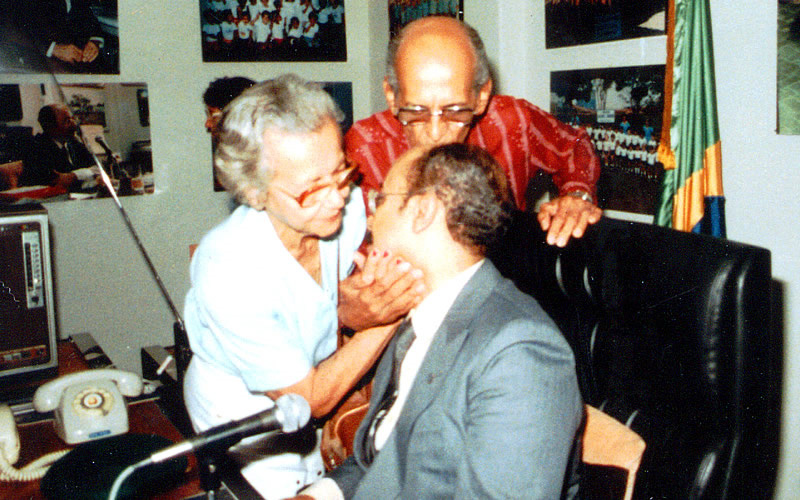
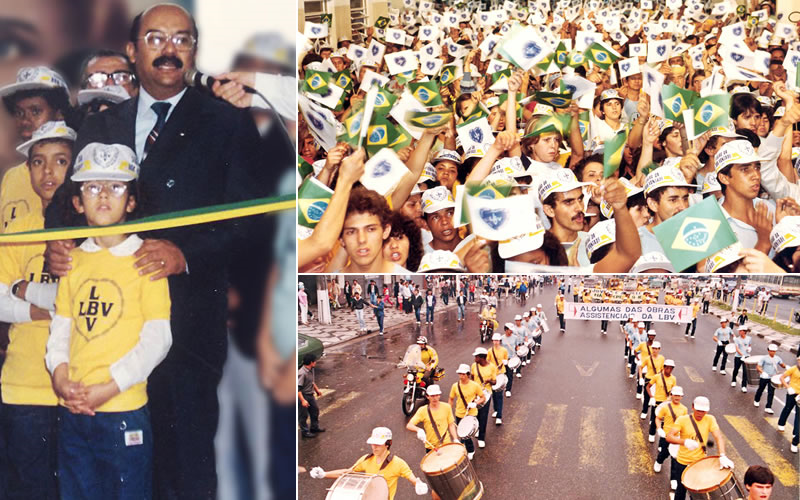
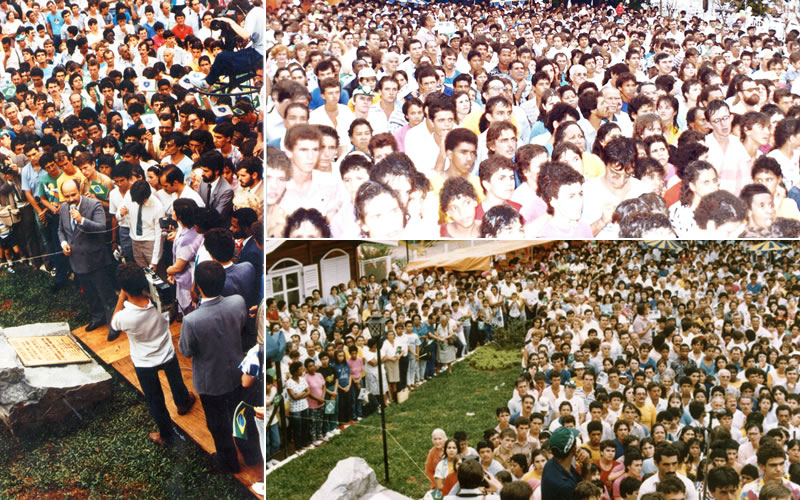
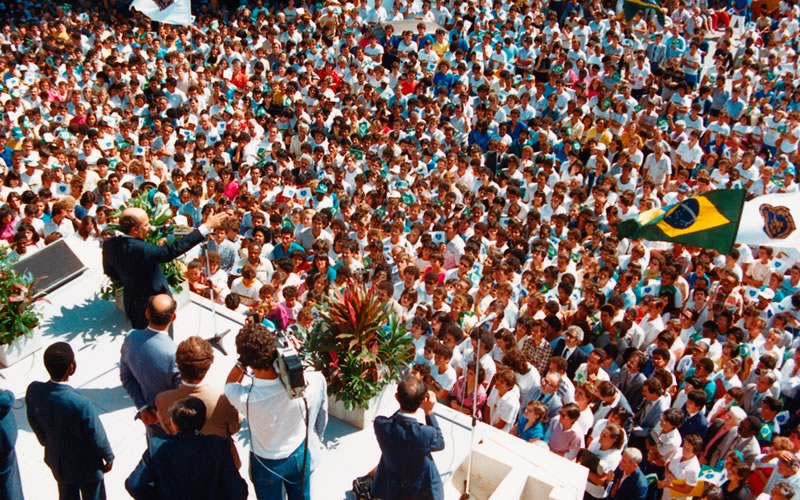

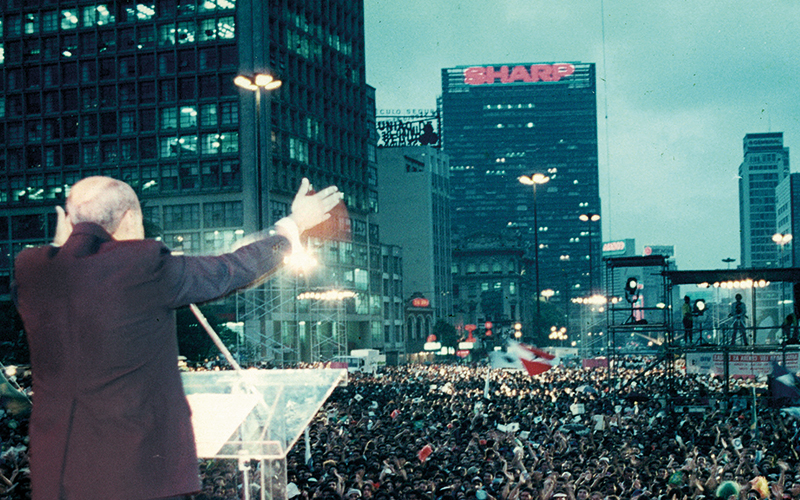


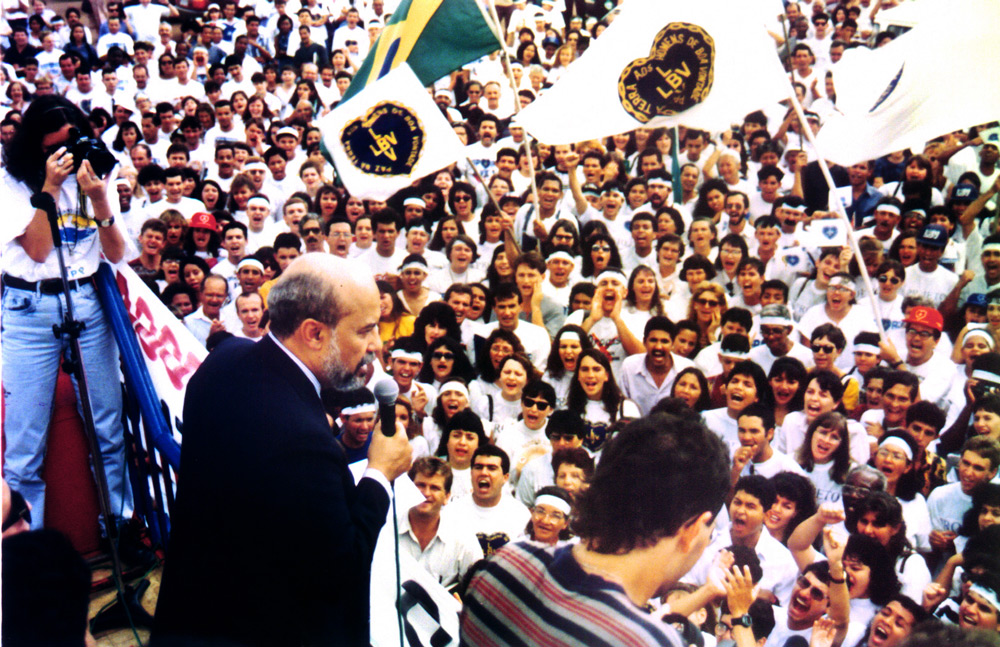
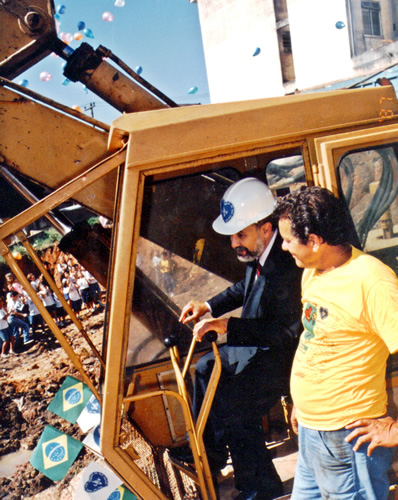
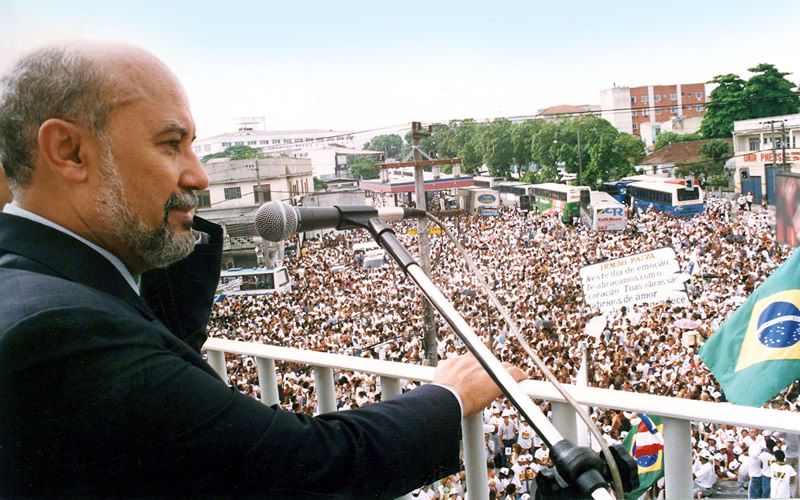
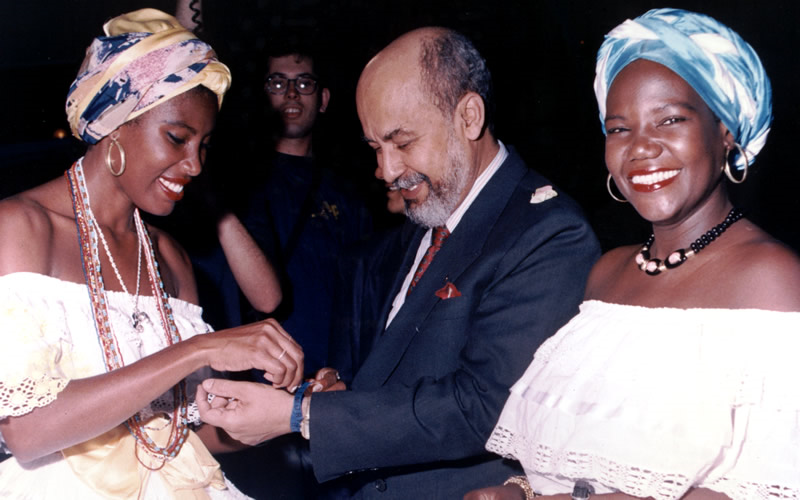
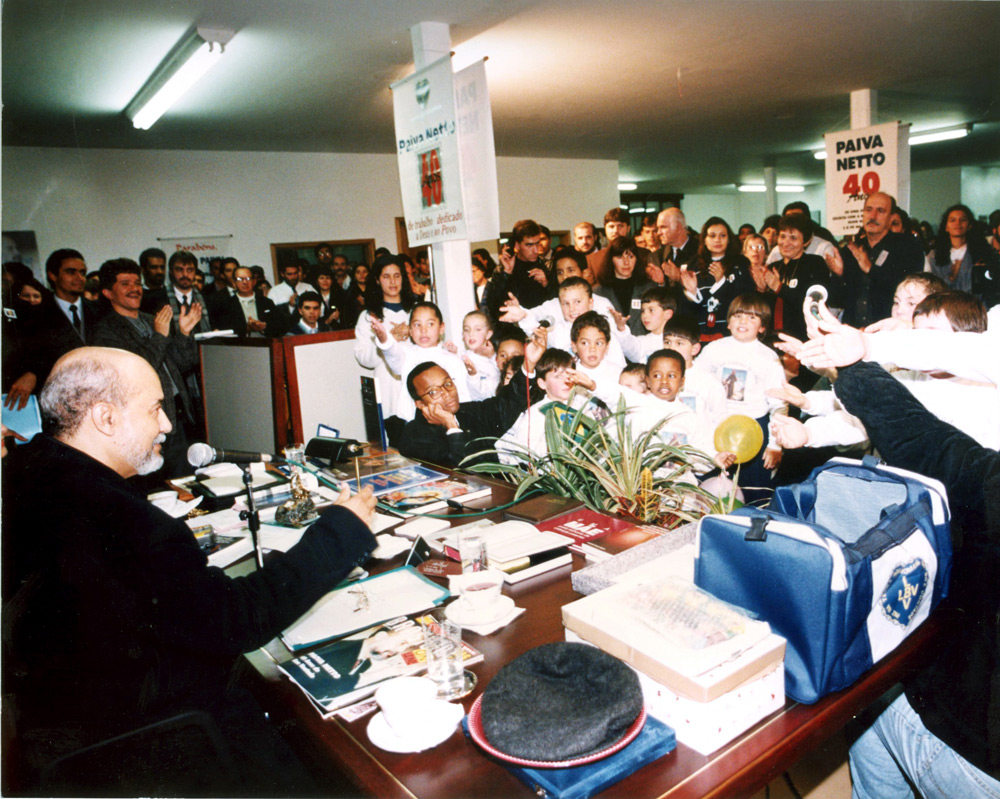
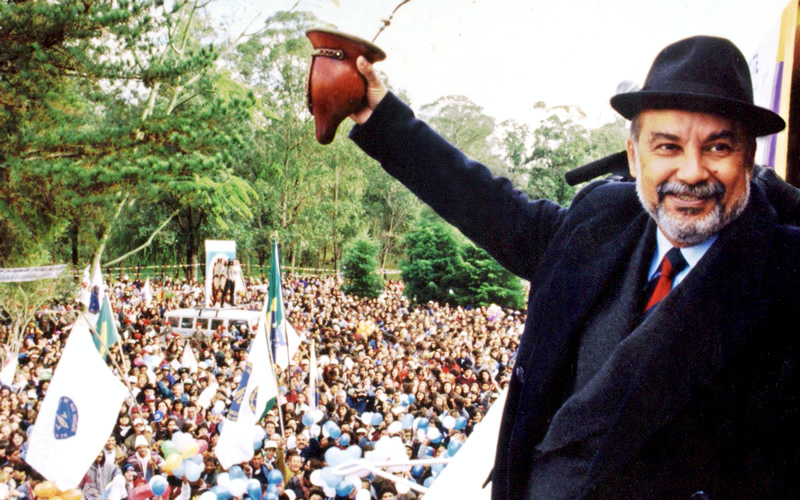

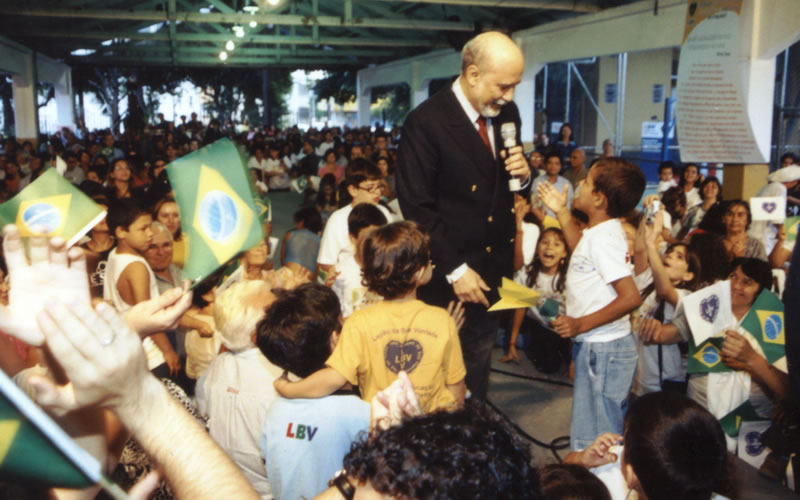

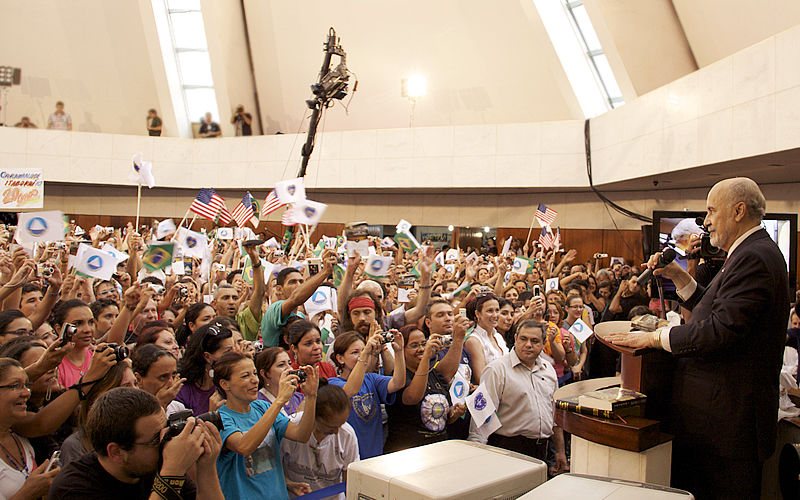
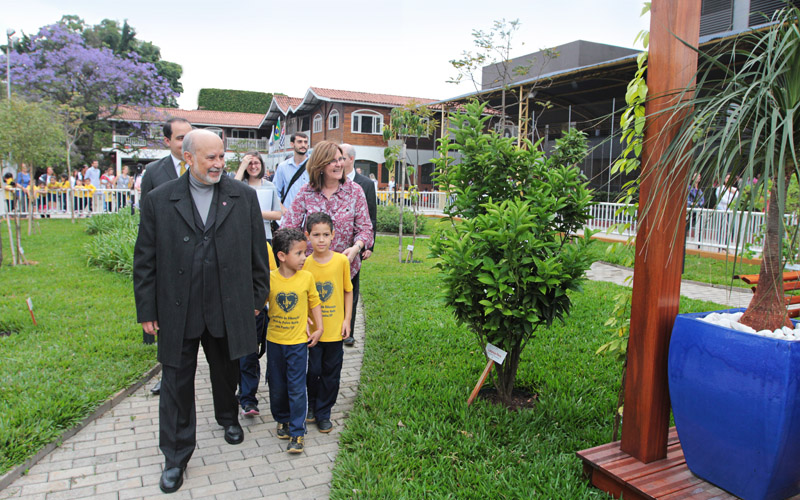
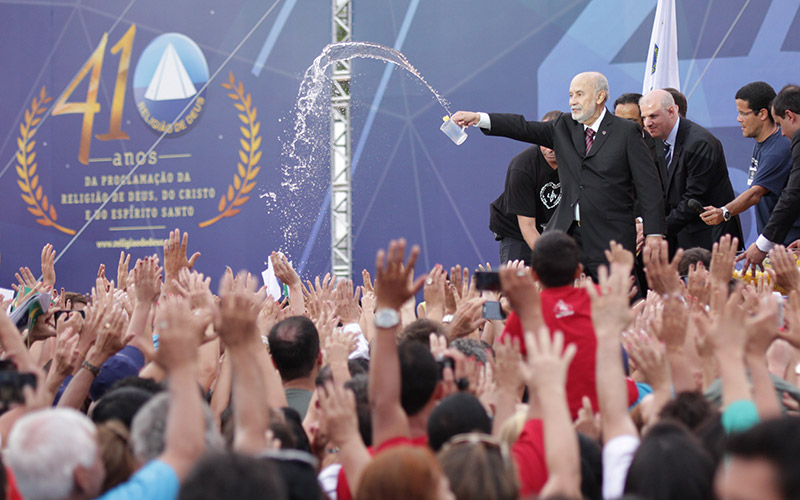
![In the Temple of Good Will, in the capital city of Brazil, Paiva Netto launched his book Jesus, a Dor e a origem de Sua Autoridade — O Poder do Cristo em nós [Jesus, the Pain and Origin of His Authority — The Power of Christ Within Us], on November 8, 2014.](https://multimidia.boavontade.com/sites/default/files/VRF_8422_e.jpg)
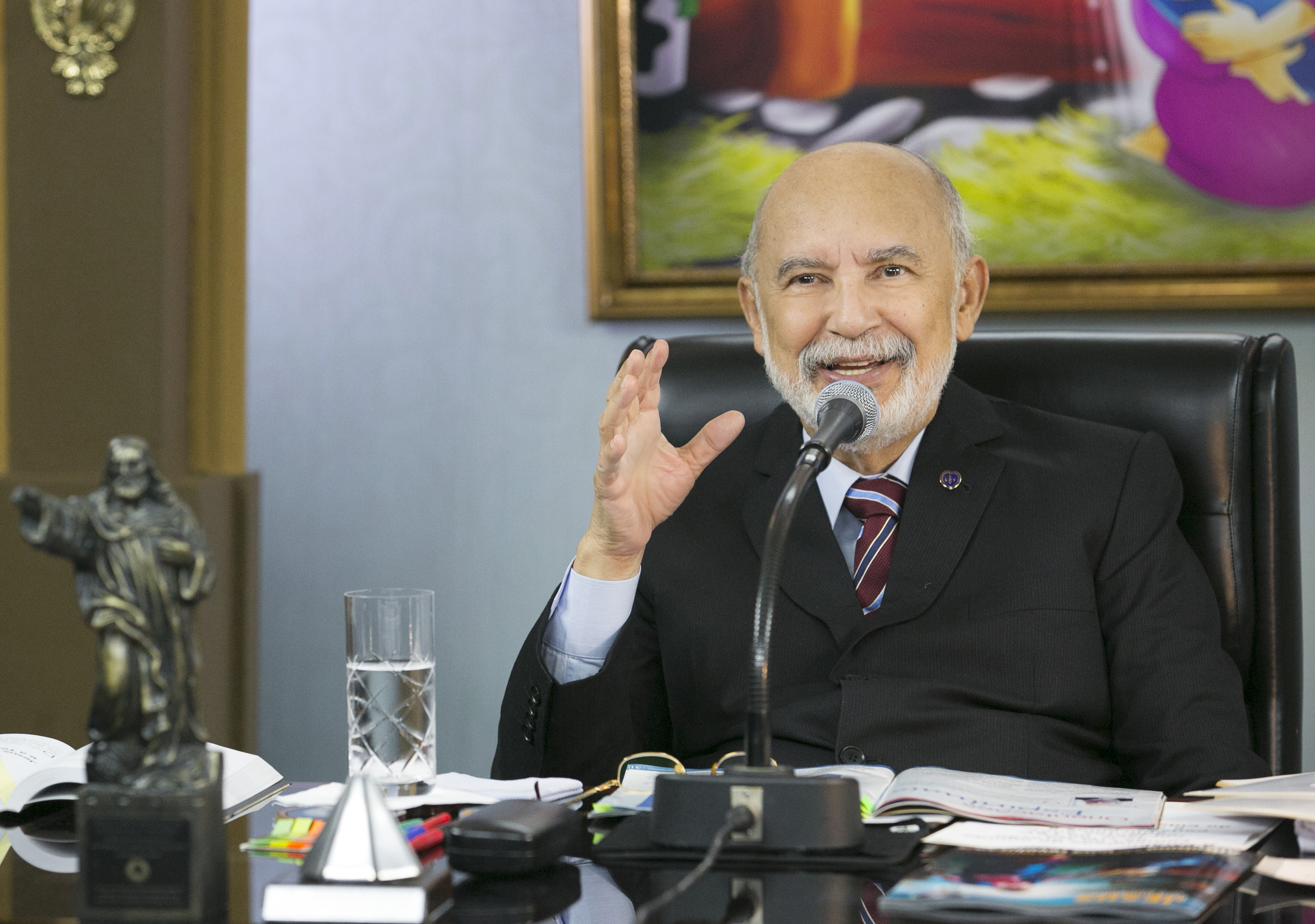

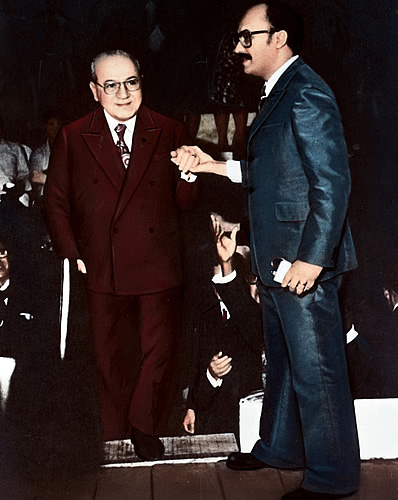
He studied at the traditional Colégio Pedro II in the Brazilian city of Rio de Janeiro, where he received the title of “Eminent Student” and was honored with a bronze plaque at the headquarters of this respected model school. Paiva Netto was still a teenager when in 1956 he started working alongside the late founder of the Legion of Good Will, the Brazilian journalist, radio broadcaster, writer, poet, and thinker Alziro Zarur (1914-1979). It is worth mentioning that one of his first contacts with the cause of Good Will was established precisely on June 29 of that year.
Regarding his beginning at the LGW, Paiva Netto recalls, “In 1953, in Rio de Janeiro, when I was 12 years old, I received from the hands of a beautiful black lady a pamphlet published by the LGW. Three years had passed and, on a certain morning, I woke up with a strong desire to turn on the radio. When I did that, I listened on the Tamoio station [later it would become Mundial] to the moving composition by Joseph Möhr (1792-1848) and Franz Grüber (1787-1863), Silent Night: it was June 29, 1956. Intrigued, I exclaimed: Mother, Christmas music in June?! Afterwards Zarur began to read a passage from the Gospel of Jesus according to Luke, 2:14, in which the Angels announce the Celestial Birth of Jesus: ‘Glory to God in the Highest and Peace on Earth to People of Good Will!’ After listening to his preaching, I became convinced: Mom, I like this man’s speech! I will follow him!!”
Moreover, he emphasizes, “My heart had been awakened to this Sublime ideal. And, on the same day that Saint Peter and Saint Paul are honored, I grabbed my bicycle and voluntarily went to the streets to ask for help for the Organization.”
With the purpose of dedicating himself fully to the LGW, Paiva Netto left behind his vocation for Medicine. Later on, he became the Secretary-General of the Legion of Good Will (position equivalent to that of Vice President), and with the passing away of Zarur, he took his place at the head of the Organization.
Some achievements of the LGW’s president
As President of the Legion of Good Will since 1979, Paiva Netto has multiplied its actions in the areas of education and social and human promotion through model schools for basic education, shelters for the elderly, and social service centers. These units host an even wider-reaching project Paiva Netto created and has long dedicated his attention to: Education with Ecumenical Spirituality, consolidated by means of a pioneering teaching line, which proposes a new learning model combining brain and heart. The educational proposal comprised of the Pedagogy of Affection and the Ecumenical Citizen Pedagogy has been successfully applied in the Legion of Good Will’s schools as well as in the social and educational programs of the Organization.
There are no borders for the Good Will ideals, which reach several regions in the world. Since the 1980s, for example, solidary initiatives have been expanded to the LGW of Argentina, Paraguay, Uruguay, Bolivia, Portugal, and the United States. They are all supported by donations from the local population.
Because of the scope and excellence of its programs and actions, the Legion of Good Will received the recognition of the United Nations (UN). That partnership has been going on for over 20 years. In 1994, the LGW first became associated with the United Nations through its Department of Global Communications (DGC). In 1999, it was also the first Brazilian non-governmental organization to obtain the general consultative status (highest degree) at the Economic and Social Council (ECOSOC). In 2000, it became member of the Conference of NGOs in Consultative Relationship with the United Nations (CoNGO), with headquarters in Vienna, Austria. In 2004, the LGW co-founded the NGO Committee on Spirituality, Values and Global Concerns at the United Nations. For over two decades, the LGW has actively participated in the main conferences and meetings of the UN, contributing with important recommendations for the implementation of international public policies, in addition to mobilizing civil society around the Sustainable Development Goals (SDGs). These recommendations and publications are edited in several languages and have been handed to Heads of State, ministerial advisers, international agencies, and representatives of civil society. Among these publications, we highlight: Solidary Society, Peace for the Millennium, Globalization of Fraternal Love, GOOD WILL Sustainable Development, GOOD WILL Women, and GOOD WILL Education.
On November 14, 2016, the president of the Legion of Good Will received an official letter from the team of António Guterres, the Secretary-General of the United Nations, which expressed Mr. Guterres’ gratitude to Paiva Netto for the letter sent to the Portuguese diplomat with his compliments on being appointed to hold the top position in the UN. The following message was signed by Kyung-wha Kang, UN Secretary-General’s Special Advisor on Policy: “Esteemed President, on behalf of the Secretary-General designate, António Guterres, allow me to acknowledge your kind words of congratulations. It is with great honor and with a sense of responsibility that he will assume his new duties. The Legion of Good Will is a civil society organization that has had a long-standing partnership with the United Nations. Its mission to encourage the practice of values in order to create a fairer and more solidary society is more globally relevant than ever. Its initiatives are aimed at improving the situation of low-income people in various areas, such as education and social and economic development, making a major contribution to achieving the Sustainable Development Goals and their target of eradicating poverty by the year 2030. We count on the Legion of Good Will to work with the United Nations in search of solutions to the most urgent global challenges of today.”
Inauguration of the Temple of Good Will and of the LGW’s Parlamundi
On October 21, 1989, Paiva Netto founded the Temple of Good Will (TGW) in Brasília/DF, Brazil, in the presence of more than 50,000 people. The Temple of Peace is the hub of Divine Ecumenism, which proclaims the socio-spiritual relationship between the creature and the Creator. This is why it is also known as the Temple of the Luminous Spirits or of the Blessed Souls, since, after all, it proclaims that the dead do not die.
Admired by many for its bold architecture, which reflects its universal Spirituality, the TGW is considered to be the largest seven-sided pyramid-shaped construction of the 20th century by the traditional newspaper Diário de Notícias (Lisbon, Portugal). Acclaimed by the people as one of the Seven Wonders of Brasília, the TGW is the most visited monument in the city, according to official data from the State Tourism Secretariat of the Federal District.
In 1994, at the Christmas of Jesus and in the presence of more than 100,000 people, Paiva Netto also inaugurated the World Parliament of Ecumenical Fraternity, the LGW’s ParlaMundi, built next to the Temple of Peace. Since then, the LGW’s ecumenical complex has been attracting more than 1 million pilgrims every year.
Commendation of the Order of Merit of Ecumenical Fraternity
In order to honor the personalities who distinguish themselves in their fields of endeavor towards the diffusion of Peace and Solidarity in Brazil and in the world, Paiva Netto has created the Commendation of the Order of Merit of Ecumenical Fraternity, an award which, since 1996, is given on an annual basis. Among those who have already received the LGW’s Commendation are the statesmen Mário Soares, former President and former Prime Minister of Portugal, and Nelson Mandela (1918-2013), Nobel Peace Prize in 1993 and the first black President of South Africa, from 1994 to 1999; Dalai Lama Tenzin Gyatso, Tibetan leader and Nobel Peace Prize in 1989; the former UN Secretary-General Kofi Annan (1938-2018); the “Athlete of the Century”, Pelé; the Spiritist medium Francisco Cândido Xavier (1910-2002); and Dom Hélder Câmara (1909-1999), former Archbishop of the cities of Olinda and Recife, of the Brazilian State of Pernambuco. In addition to these, other great names from several branches of the Brazilian society and of the world were also honored by a special session of the Order of Merit of Ecumenical Fraternity, delivered on the occasion of the Brazilian Day, in New York (USA), which is held annually in the heart of Manhattan to celebrate the Independence of Brazil. This festival receives every year more than a million people, establishing itself as one of the Big Apple’s most popular gatherings.
The LGW’s World Spirit and Science Forum
The LGW’s president also created in the year 2000 the LGW’s World Forum Spirit and Science, which became the greatest world movement of this nature in forming new paradigms of human thought, founded on the convergence and on the interchange between the scientific knowledge and the several religious traditions. This Forum has already counted on the presence of many notables such as the North American astronaut Edgar Mitchell, member of the Apollo 14 crew and the sixth man to walk on the moon; Alexander Lazutkin, the Russian cosmonaut who was part of the crew of the MIR-23 Mission; the quantum physicists and writers Amit Goswami (from the United States), Patrick Drouot (from France), and Waldyr Rodrigues (from Brazil); the Brazilian astronomer Ronaldo Rogério de Freitas Mourão (1935-2014); the French psychologist and educator Pierre Weil (1924-2008); and the Tibetan Lama Chagdud Tulku Rinpoche, aside from other important personalities. The event proposes more than a permanent theoretical debate, stimulating the implementation of its proposals in the pragmatic field of society’s achievements. He also founded in 2007 the Jesus, the Ecumenical Christ, the Divine Statesman Academy, composed of the Institute for Study and Research on Science of the Soul and of the Institute for Study, Research, and Experience of the New Commandment of Jesus.
In order to spread Spiritual Citizenship (a concept he advocates), Paiva Netto created the Super Good Will Communications Network (radio, TV, the Internet, and publications). He is a writer of international reputation and the author of many best-sellers. One of his most celebrated literary work is the book series “The Apocalypse of Jesus for the Simple-Hearted,” which has sold more than 3.5 million copies. His articles have been published in major newspapers, magazines, and web portals in Brazil and abroad. Among them: Diário de Notícias, Jornal de Coimbra, Correio da Manhã, Jornal de Notícias, O Primeiro de Janeiro, Notícias de Gaia, Voz do Rio Tinto, Jornal da Maia, O Público, Campeão das Províncias, Audiência, and O Despertar (Portugal); Time South, Jeune Afrique, and African News (Africa); Daily Post (international circulation); Clarín (Argentina); Jornada and El País (Bolivia); El Diário Notícias and ABC Color (Paraguay); El País (Uruguay); International Business and Management (China); and Deutsche Zeitung (Germany).